Choosing a paint finish sounds simple until you are standing in front of dozens of options, all claiming to be the right pick. Satin paint vs. matte paint is one of the most common comparisons homeowners wrestle with, and for good reason. The same paint color can look completely different depending on the finish you choose.
This guide breaks down satin paint vs. matte paint in plain terms. You will see how each finish looks, how it performs, where it works best, and where it can fall short. The goal is clarity, not confusion, so you can feel confident in the decision for your space.
Key Takeaways:
- Satin paint vs. matte paint comes down to function as much as appearance, not just color choice.
- Satin paint reflects more light and handles cleaning better, which suits busy rooms like kitchens and hallways.
- Matte paint absorbs light, helping hide wall flaws and create a softer look in bedrooms and living areas.
- Rooms with heavy use often benefit from satin finishes, while low-traffic spaces lean toward matte.
- Mixing finishes throughout a home often delivers better long-term results than using one sheen everywhere.
Why Paint Finish Matters More Than Most People Expect
Color often gets all the attention, yet paint finish plays just as big of a role in how a room feels and functions. Paint finish affects how light reflects, how walls hide imperfections, and how well surfaces handle daily wear.
With satin paint vs. matte paint, the differences show up quickly once the paint is on the wall. One finish may highlight texture, while the other softens it. One may handle cleaning better, while the other creates a calmer visual tone.
That is why finish should match the room, not just the color scheme.
Understanding Satin Paint At A Glance

Satin paint sits in the middle of the sheen scale. It has a soft glow that reflects light without looking overly shiny. Because of that balance, satin paint often feels polished but not flashy.
Homeowners frequently choose satin paint for areas that see regular use. It handles light cleaning better than flatter finishes and tends to hold up well over time.
Where Satin Paint Is Commonly Used
-
Interior walls in hallways and family rooms
-
Kitchens and bathrooms with regular moisture
-
Doors, trim, and cabinetry when high gloss feels too bright
Strengths Of Satin Paint
-
Light reflectivity adds subtle depth to color
-
Better resistance to scuffs and marks
-
Easier to wipe clean with water and mild cleaners
Limitations To Keep In Mind
-
Wall imperfections are more noticeable
-
Application mistakes can stand out
-
Usually costs a bit more than flatter finishes
What Sets Matte Paint Apart

Matte paint has little to no sheen, which creates a smooth, soft appearance. It absorbs light rather than reflecting it, making walls feel calmer and more uniform.
When comparing satin paint vs. matte paint, matte often wins for visual softness. It is especially helpful in rooms where walls are not perfectly smooth.
Where Matte Paint Works Well
-
Bedrooms and living rooms
-
Dining rooms and home offices
-
Ceilings and large wall surfaces
Benefits Of Matte Paint
-
Hides dents, patches, and uneven texture
-
Creates a rich, velvety look
-
Often provides excellent coverage due to higher pigment
Drawbacks To Consider
-
Less forgiving with frequent cleaning
-
Not ideal for high traffic areas
-
Limited use on trim or doors
Appearance Differences You Will Notice Right Away
The biggest visual contrast in satin paint vs. matte paint comes down to how they interact with light.
Satin paint reflects light gently, which can make colors appear slightly brighter. This can add life to darker spaces, but it may also draw attention to surface flaws. In rooms with large windows, satin finishes can feel more reflective than expected.
Matte paint absorbs light, helping walls look smoother. That softness works well in rooms meant for comfort and relaxation. However, in very low light areas, matte finishes may make spaces feel darker.
Color perception also plays a role here. If you have ever wondered does paint dry darker or lighter, finish can influence that final look, especially with deeper colors.
Durability And Daily Wear Comparison
Durability is where satin paint vs. matte paint begins to separate more clearly.
Satin paint includes more binders, which gives it flexibility and resistance. That added structure helps it handle bumps, fingerprints, and routine cleaning better than matte paint.
Matte paint lacks that flexibility. While it hides damage well, it does not resist it as effectively. Marks can show after repeated contact, especially in busy areas.
High Traffic Areas Often Favor Satin Paint
-
Entryways
-
Hallways
-
Kitchens and bathrooms
Low Traffic Spaces Often Favor Matte Paint
-
Bedrooms
-
Formal living rooms
-
Ceilings
Texture And Feel Under Natural Light
Texture is subtle, yet it matters. Satin paint has a slightly smooth, almost silky feel. That texture pairs well with trim, windows, and surfaces that benefit from a finished appearance.
Matte paint feels softer and more uniform. On darker colors, it can create a refined depth that many homeowners appreciate. That effect often complements broader interior design themes, especially when combined with architectural paint ideas that emphasize balance and cohesion.
Cost Differences And What Influences Price
When comparing satin paint vs. matte paint, cost differences are usually modest. Satin paint often costs a few dollars more per gallon due to added resins and binders.
However, price is influenced more by paint quality than sheen alone. Higher quality paints often perform better, regardless of finish. Coverage, adhesion, and long-term performance all play a role.
Choosing the right finish for the space often matters more than saving a small amount upfront.
Choosing The Right Finish Room By Room
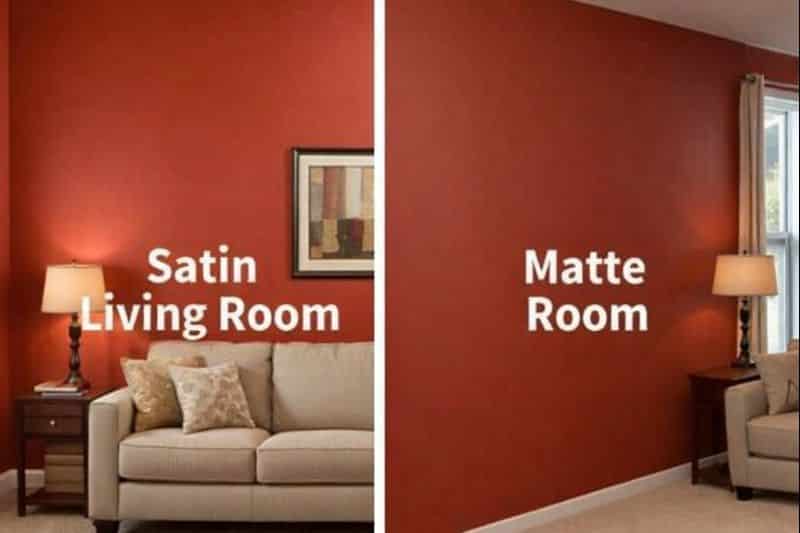
Rather than picking one finish for the entire home, many homeowners mix finishes based on use.
A Practical Room-by-Room Approach
-
Use satin paint in kitchens, baths, and hallways
-
Use matte paint in bedrooms and living spaces
-
Select finishes thoughtfully for trim and doors based on design goals
For trim and shutters, finish selection becomes even more important. This is where guidance like the best paint finish for trims and shutters helps clarify what performs well while still looking refined.
How Color Selection Ties Into Finish Choice
Finish and color work together. A finish can shift how bold or muted a color feels once applied. Satin paint vs. matte paint comparisons often reveal that satin makes colors appear slightly brighter, while matte softens them.
Visual planning tools can help narrow options early. Many homeowners find paint color visualizers helpful for testing how finishes and colors interact before final decisions are made.
A Professional Perspective On Application And Results
Application quality affects how both finishes perform. Satin paint shows inconsistencies more easily, which makes surface preparation and technique important. Matte paint is more forgiving, but proper prep still matters for long term results.
Professional painters factor in wall condition, lighting, room use, and desired appearance before recommending satin paint vs. matte paint. That evaluation helps avoid common frustrations after the paint dries.
What To Expect From A Professional Painting Process
At S&S Painting & Restoration, our process focuses on long-term results rather than quick fixes. When helping homeowners decide between satin paint vs. matte paint, we look at how each room is used and how the finish will age over time.
Our Painting Process Includes
-
Evaluating wall condition and surface needs
-
Discussing finish options based on room function
-
Preparing surfaces for proper adhesion
-
Applying consistent coats for even appearance
-
Final walkthrough to confirm results
This approach allows homeowners to enjoy the finished space without second-guessing their choices. Our team of expert painters in Sheboygan, WI focuses on practical guidance rather than trends.
Final Thoughts On Satin Paint vs. Matte Paint
Satin paint vs. matte paint comes down to how you want a space to look and function over time. Satin offers durability and subtle sheen, while matte provides softness and visual calm. Each finish has a place, and mixing them often leads to the best overall result.
When the selection feels overwhelming, professional insight makes a difference. S&S Painting & Restoration proudly serves Sheboygan, Elkhart Lake, Kohler, and the surrounding areas with thoughtful interior painting services.
Call us at 920-332-5772 for a FREE estimate and clear guidance on choosing the right finish for your home.