
You spent good money on a cedar fence, and now the stain is cracking, fading, or turning that dull gray you were hoping to avoid. That is one of the more discouraging realities of wood fencing in Elkhart Lake: the wood looks stunning when fresh, but cedar fence stain that was supposed to last for years can start breaking down after a single Wisconsin winter. The good news is that stain failure is almost always traceable to a handful of specific causes, and once you know what went wrong, you can address it and stop it from happening again.
Key Takeaways
- Cedar fence stain fails for predictable reasons: moisture, skipped prep, the wrong product, or bad timing.
- Wisconsin winters are hard on film-forming finishes, so cedar needs a stain that penetrates, not one that sits on top.
- Oil-based, semi-transparent stains generally outperform water-based products on cedar in cold climates.
- New cedar fences should dry for 4 to 8 weeks before stain is applied.
- Thorough prep, meaning cleaning, brightening, and moisture testing, separates a 2-year stain from a 5-year stain.
- When stain has failed completely or the wood is severely weathered, a professional can keep you from compounding the problem.
Cedar Is Beautiful, But It Is Not Invincible
Cedar has natural oils and tannins that give it real resistance to rot and insect damage, which is part of why it is so popular around Elkhart Lake. But natural resistance is not the same as no maintenance.
UV rays break down the wood’s lignin, deteriorating the surface and turning it gray, while moisture drives expansion and contraction cycles that create cracks, warping, and eventual rot. Without intervention, even a resilient cedar fence weathers significantly within the first year. Staying ahead of that is the point of regular deck and fence maintenance.
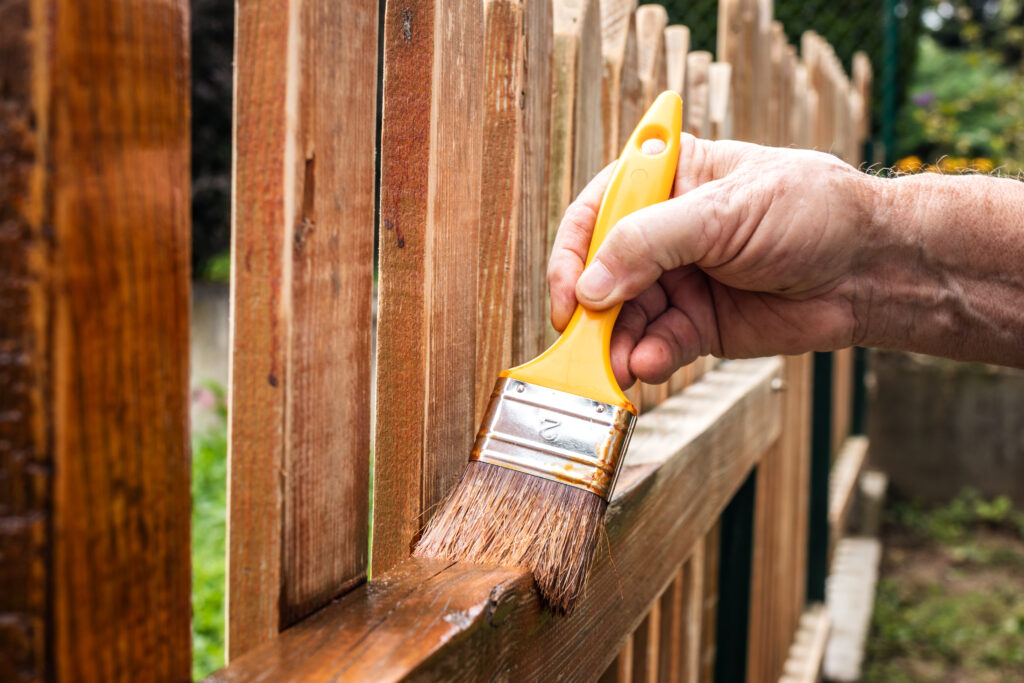
The job of cedar fence stain is to slow all of that down by penetrating the wood fibers, keeping moisture out, and blocking UV damage. When the stain fails, the wood takes the full hit from the elements.
Why Moisture Is Cedar Fence Stain’s Biggest Enemy
Water is behind most cedar fence stain failures, and it shows up in more than one way. The most common is staining wet wood, which traps moisture and leads to peeling or mold, and skipping proper cleaning keeps the stain from bonding at all.
Staining a new cedar fence too soon traps moisture and can cause mold, rot, or poor adhesion. Waiting about 4 to 8 weeks after installation gives the wood time to dry and settle, especially if it was recently milled or rained on. New wood is not the only risk, though, since a fence power-washed right before staining, or stained during a humid stretch, hits the same trapping problem years later.
A simple test before you start: sprinkle water on the surface. If it beads up, the wood is still too wet, and if it soaks in, the stain will adhere better.
Wisconsin adds another layer. Elkhart Lake sees heavy spring rain, humid summers, and freeze-thaw cycles all winter, and that constant cycling, wet to frozen to wet again, puts real stress on any finish that sits on top of the wood instead of locking into it.
Film-Forming Products and Paint Do Not Hold Up on Cedar
Here is something worth knowing if your stain keeps failing on a regular cycle: not all products labeled stain actually penetrate wood. Some form a film on the surface instead of absorbing into the grain, and that is a real problem for cedar.
Unlike paint, which sits on top, cedar fence stain penetrates deep into the grain to protect against sun, moisture, mold, and insects. When a product sits on top instead, it has nowhere to go when the wood expands and contracts, and that is where peeling starts. Wisconsin winters can make paint fail in less than a year on cedar, because cedar needs to breathe.
Oil-based stains have long dominated the cedar market for their superior penetration and durability. Semi-transparent stains are a strong choice when you want the grain to show, since they carry enough pigment for color and UV protection while keeping the cedar’s texture visible, and they typically last 3 to 4 years before maintenance.
If you have been applying a water-based product every couple of seasons and wondering why it never holds, the formula may be working against you on cedar. One caveat: oil-based stains carry higher VOCs, and the EPA’s guidance on VOCs in paints and coatings is worth reviewing if you are sensitive to fumes, even outdoors.
Skipping Prep Is Where Most Stain Jobs Fall Apart
This is the big one. A large share of stain failures trace back not to the stain itself, but to the surface it went onto. Leaving out or rushing the cleaning, brightening, and light sanding creates a barrier between the wood and the new stain, so it sits on contamination instead of bonding, and under weather stress that weak bond fails fast.
Cleaning
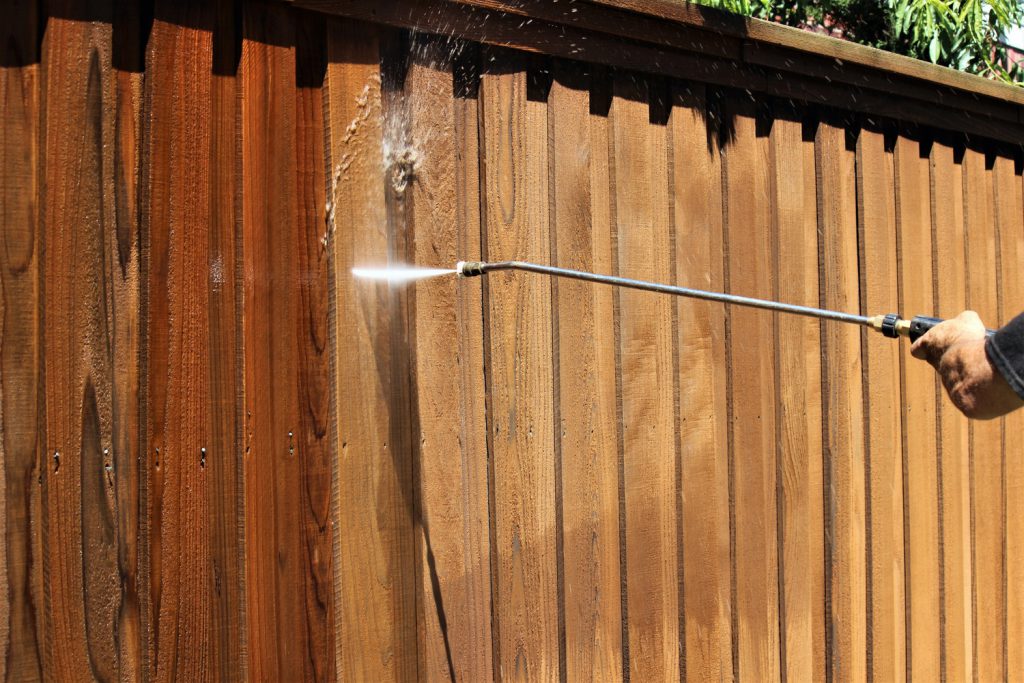
Wash the fence to remove dirt, mildew, algae, and any old product that is fading or failing. A low-pressure wash works well, and while a power washer can do the job, too much pressure damages cedar pickets, so keep it on a low setting and keep the nozzle moving.
Brightening
A wood brightener opens the pores after washing and neutralizes tannin bleed or surface discoloration. Even new cedar can carry mill glaze, which forms when high-speed blades cut the wood and the sap dries on the surface. A brightener removes it and opens the wood so stain can penetrate correctly.
Drying
After any water-based cleaning, the fence needs to dry fully before stain goes on. Plan on at least 24 to 48 hours of drying time before applying.
Sanding
Rough spots, raised grain, or areas with old peeling stain may need light sanding. Sandpaper or a sanding tool smooths the rough areas and opens the pores, which helps the stain penetrate. The same prep and product logic carries over to horizontal surfaces, which our post on the best way to stain a deck covers in detail.
Skip any of these steps and you do not just hurt the finished look, you actively shorten the life of whatever product you put on.
Timing and Weather Matter More Than Most Homeowners Expect
Elkhart Lake’s climate means short windows for exterior work. Getting the timing right on a cedar fence staining project is not optional, since it determines whether the finish holds for 2 years or 5.
The conditions during application drive long-term performance. In direct sun, stain dries too fast and will not penetrate, leaving a weak surface film, and temperatures above 90°F or below 50°F disrupt how it cures. Ideal conditions are 50°F to 85°F, low humidity, and no rain for at least 24 hours.
That window closes fast in Wisconsin. Late spring through early fall gives the most reliable conditions around Elkhart Lake, and even then a 3-day weather check before starting is smart. S&S Painting & Restoration does not take on exterior work below 35°F, and the same reasoning applies to stain, since it will not cure correctly in the cold and you will end up redoing the project sooner than you should.
What Happens When You Keep Putting It Off
Some homeowners plan to get to this next season, and then the season after that. It is worth knowing what that timeline costs.
Once cedar has weathered significantly, prep becomes far more intensive. Delaying too long exposes the wood to UV and weathering that can shorten its lifespan considerably, and wood that could have been saved with timely staining may reach the point where boards need replacing rather than refinishing.
As a general rule, refreshing the stain every 2 to 5 years is appropriate, with the exact interval depending on product type, sun exposure, and how wet your site gets. A fence on the shaded north side may go longer between treatments than one that bakes in full afternoon sun.
For homeowners in Elkhart Lake, spring is usually when the problem becomes visible. You walk outside after months of snow and ice and see how much the fence has changed, and the question becomes whether the wood still takes stain well or needs more significant prep first.
When Professional Help Makes Sense
There is a real difference between a fence that needs a routine re-coat and one with failed stain, heavy gray weathering, or wood that has started to soften. That difference changes what the job actually requires.
If you have already stained the fence yourself and watched it fail within a season or two, there is usually an identifiable reason, and repeating the same approach will likely produce the same result. Our post on why DIY exterior paint jobs fail covers several of the same principles that apply to staining.
S&S Painting & Restoration is a father-son team, Bob Sr. and Bob Jr., serving Elkhart Lake and the surrounding East Central Wisconsin area. The team is factory trained through Sherwin-Williams and a member of the Painting Contractors Association. That mix of product knowledge and training matters when you need cedar fence stain to hold through Wisconsin winters, not just look good on day one.
Not sure whether your fence needs staining, stripping, or something closer to restoration? Our post on when to call a restoration specialist can help you figure that out before spending money on the wrong approach.
Ready to Stop Watching Your Cedar Fence Deteriorate?
When you call, the process starts with a look at the wood’s current condition, a conversation about what has been done before, and an honest read on the prep and product the fence actually needs, with no pressure and no unnecessary add-ons. S&S Painting & Restoration LLC serves Elkhart Lake and the surrounding area with professional fence and deck staining backed by factory-trained product knowledge.
Call 920-332-5772 for a FREE estimate today, and get a straight answer about what your cedar fence needs to last.