Spend a little time around painting projects and you will hear two opinions about primer. One group says it is necessary for a professional result. The other group thinks it is optional and that modern paint can handle the project alone.
The truth sits somewhere in the middle, but leaning heavily toward the first group. Paint primer is not just another coat in the process. It is the layer that prepares the surface so paint can bond properly, cover evenly, and hold up for years instead of months.
If paint is the visible finish of a project, primer is the preparation that makes that finish possible.
Key Takeaways:
The Foundation Under Every Good Paint Job
To understand paint primer, think about what happens when paint meets a raw surface.
Many building materials are porous. Drywall absorbs moisture. Wood contains natural oils. Brick and concrete pull liquid deep into their surface. When paint is applied directly to these materials, it can soak in unevenly or struggle to bond.
That is where primer enters the picture.
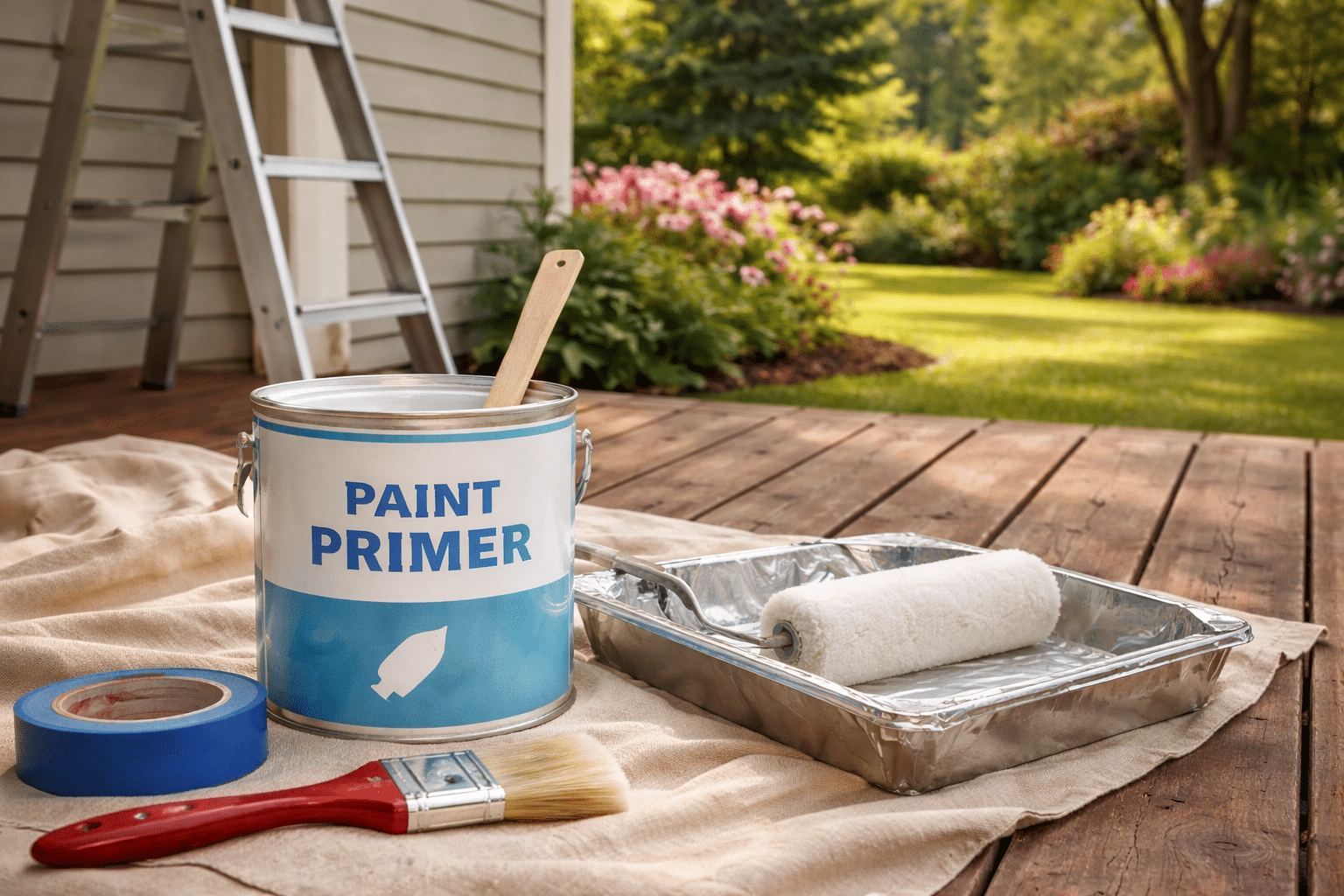
Primer acts as the middle layer between the material and the paint. It seals the surface and creates a uniform base for the finish coat. Instead of paint trying to bond with raw drywall or wood fibers, it bonds to the primer.
The result is smoother coverage, stronger adhesion, and better durability.
Paint Primer And Paint Do Two Very Different Jobs
At first glance, primer and paint can look almost identical. Both come in cans. Both are applied with brushes, rollers, or sprayers. Both dry into a solid coating.
However, their purpose is completely different.
- Paint is designed to deliver color and protection.
- Primer is designed to prepare the surface so that paint can do its job correctly.
A simple way to think about it is this.
Primer prepares the surface. Paint protects the surface. Without primer, paint has to perform both roles at the same time. Sometimes it can manage that task, but often it leads to uneven coverage or early peeling.
Primer removes that burden from the paint.
Why Adhesion Matters More Than People Expect
Adhesion is the technical word for how well paint sticks to a surface.
When paint adhesion is strong, paint bonds tightly and holds up against moisture, cleaning, and daily wear. When adhesion is weak, paint may peel, chip, or bubble over time.
Paint primer improves adhesion by creating a surface designed specifically for paint to bond to.
This becomes especially important when painting surfaces like:
- Glossy trim or cabinets
- Metal surfaces that may develop rust
- Raw wood that contains natural oils
- Previously painted walls with uneven coatings
Primer creates consistency. Instead of paint trying to grip several different surfaces at once, it bonds to a single prepared layer.
Why Primer Helps Paint Look Better
Another job of paint primer is to help paint color look the way it should.
Without primer, the color underneath can affect the final result. A dark wall painted light gray may still show shadows from the old color. Patch repairs on drywall may appear as dull spots because the surface absorbs paint differently.
Primer solves these problems by creating an even base layer. Once that base is in place, the final paint color appears more consistent across the entire wall or surface.
This is why primer is often used when:
- Changing from dark colors to lighter colors
- Covering stains from water or smoke
- Painting newly repaired drywall
- Preparing surfaces with uneven textures
In many cases, primer also reduces the number of paint coats required to reach full coverage.
The Different Types Of Paint Primer
Not all primers are designed for the same surfaces. Professional painters choose primers based on the material being coated.
Here are some of the most common types.
Latex Primer
Latex primer is water-based and commonly used on interior walls and ceilings. It works well for drywall, plaster, and wood. Latex primers dry quickly and work well under acrylic paint or latex paint.
Oil-Based Primer
Oil-based primer is stronger and used when heavy stain blocking is required. It works well on surfaces with water stains, smoke damage, or wood tannins. Oil-based primer also bonds well to glossy surfaces.
Shellac Primer
Shellac primer is known for sealing tough stains and odors. It is often used on surfaces affected by smoke damage or heavy discoloration. Shellac primers are also common for cabinets and trim.
Masonry Primer
Masonry primer is designed for porous surfaces such as brick, concrete, and stucco. These materials absorb moisture easily. Masonry primer seals the surface so paint adheres evenly. Without it, paint may soak into the material and appear patchy.
Surface Preparation And Primer Work Together
Primer does not work alone. It performs best when paired with good preparation.
Before primer is applied, painters typically prepare the surface so it is clean and smooth.
Preparation often includes steps like:
- Cleaning dust and dirt from the wall or siding
- Sanding rough areas using sandpaper
- Repairing holes or cracks with a putty knife
- Applying caulk around windows or trim
- Applying primer before finish coats
These steps allow primer to bond properly and improve adhesion.
Without preparation, primer may struggle to perform its role.
Why Primer Helps Paint Last Longer
Durability is one of the biggest benefits of using paint primer. A properly primed surface reduces moisture penetration and strengthens the bond between the surface and the paint. This is especially helpful for exterior surfaces such as siding, brick, windows, and trim.
Primer also helps protect against problems like mildew growth, peeling coatings, and uneven fading. Because of these benefits, professional painters often treat primer as the foundation of the entire paint system. Skipping it may shorten the life of the painting project.
How Professional Painters Approach Priming
Experienced painting crews treat primer selection as part of the strategy of the project.
At S&S Painting & Restoration, we focus on selecting the correct primer for the material being coated. Homeowners working with experienced painters in Sheboygan, WI often want finishes that look clean and hold up for years.
That process usually begins with preparation.
Our team typically follows a process like this:
- Surface cleaning and dust removal
- Sanding to improve paint adhesion
- Minor repairs to walls, siding, or trim
- Primer selection based on the material
- Final paint coats for durability and protection
This method helps create a stronger coating system and more consistent paint results.
If you are planning a painting project in Sheboygan and the surrounding areas, call S&S Painting & Restoration at 920-332-5772 for a FREE estimate. Our team is happy to walk you through the process and answer any questions about your upcoming project.