Paint colors for kitchen walls are easier to choose when the cabinets come first. In most kitchens, cabinet doors, countertops, backsplash, flooring, and appliances take up more visual space than the walls, so those fixed or semi-fixed surfaces should narrow the palette before you start comparing wall colors.
For Sheboygan Falls homeowners, this guide uses a cabinet-first planning process: decide what stays, choose the cabinet direction, check the countertop and backsplash, then select the wall color, sheen, and final samples around that foundation.
Start by Deciding What Is Staying in the Kitchen
Before choosing a color, make a short list of the surfaces that are not changing. These materials create the boundaries for the new palette.
If the Cabinets Are Changing, Choose Them Before the Walls
Cabinetry fills much more of the visual field than the narrow wall areas between counters, doors, and upper cabinets. That makes cabinet color the stronger decision when both surfaces are changing.
Choose the cabinet direction first, then use the wall color to support it. This is especially useful when the kitchen includes an island or a two-tone cabinet plan.
S&S Painting & Restoration offers cabinet painting and refinishing for kitchens where the existing layout is staying but the finish needs an update.
Use the Countertop and Backsplash to Control the Undertone
Countertops and backsplash tile can contain several colors at once. A wall color that matches one small fleck may still clash with the overall surface.
Stand back and identify the dominant temperature of the material. Then compare paint samples beside the full countertop or backsplash instead of using a photo on your phone.
If the stone or tile already has strong movement, a quieter wall color often gives the kitchen more balance.
What the 2026 Kitchen Data Supports
The National Kitchen & Bath Association 2026 Kitchen Trends Report found neutrals leading color preferences, with greens and blues also receiving strong support from the industry professionals surveyed.
The report also found that stronger color is often being introduced through islands, backsplashes, wallpaper, and accessories. Natural wood grain is also receiving more attention in cabinetry.
That supports a flexible approach: the kitchen does not need one dominant color family on every surface. Wall color, cabinet finish, wood, tile, and accent areas can share the work.
Warm Neutrals Can Bridge Wood and Stone
Khaki, beige, mushroom, cream, and warm greige families can work well when the kitchen already has wood grain, warm stone, or mixed metals.
Sherwin-Williams selected Universal Khaki SW 6150 as its 2026 Color of the Year, which makes warm khaki a useful direction to test. It should still be compared with the actual cabinets and countertops before being approved.
Muted Greens Work Best When They Repeat Something in the Room
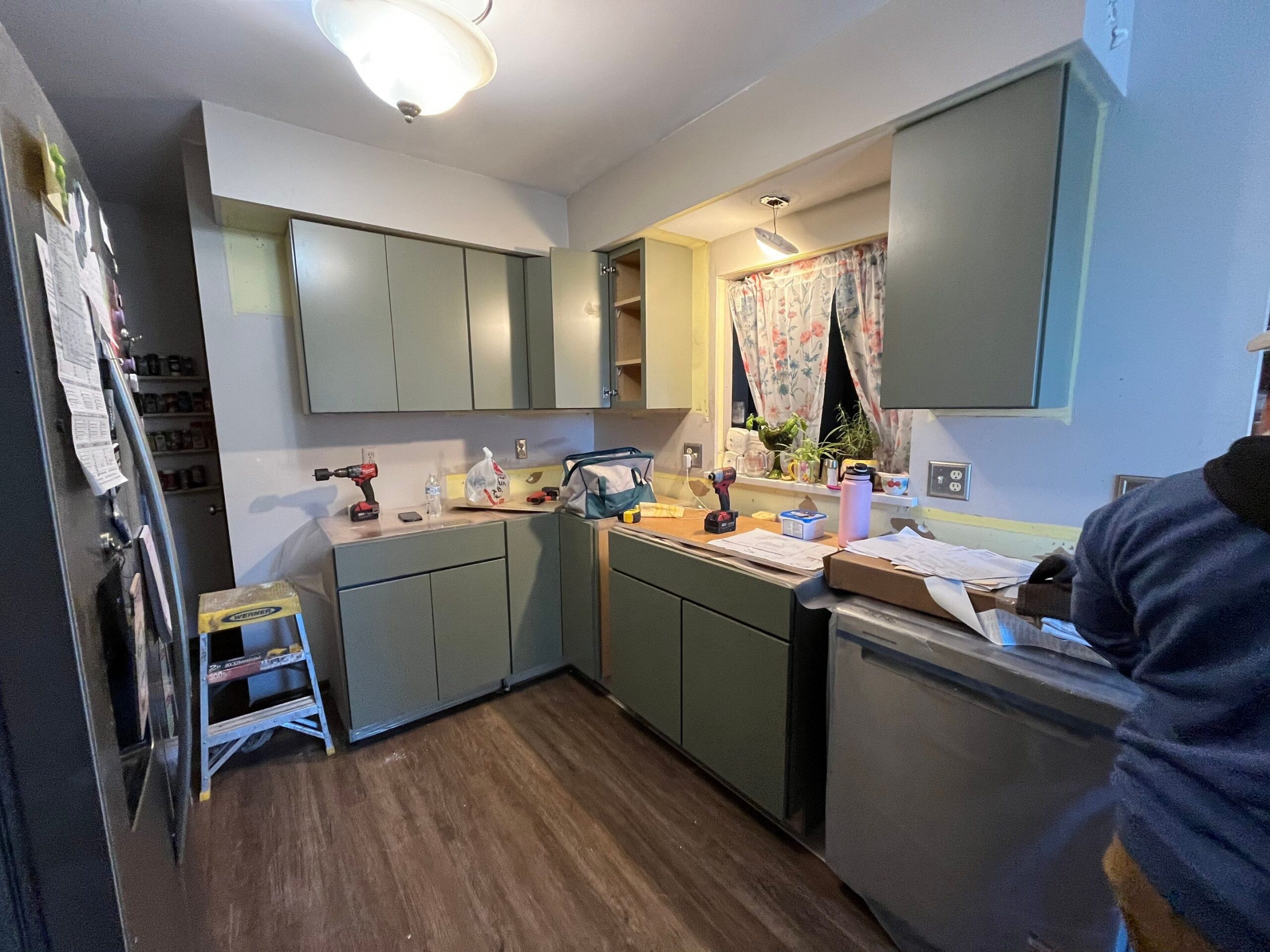
Sage, olive, eucalyptus, and gray-green can work on cabinets, islands, or walls. The color feels more intentional when it connects to stone, wood, tile, upholstery, or another finish already present.
Green can lean warmer or cooler depending on the product and lighting. Test it beside the countertop and flooring instead of choosing it from the fan deck alone.
Blue Can Be an Accent, Cabinet Color, or Wall Color
Blue is another strong color family in the 2026 NKBA data, but its role matters. A soft blue-gray wall, a navy island, and deep blue lower cabinets create very different kitchens.
Decide how much visual weight the blue should carry before choosing the specific shade. In a kitchen with darker counters and flooring, another deep surface may create more contrast than you want.
Two-Tone Cabinets Need One Clear Lead Color
Two-tone kitchens can work well when one cabinet color clearly leads and the second color has a defined role. Common examples include a contrasting island, darker lower cabinets, or a separate bank of cabinetry.
The wall color should support both cabinet finishes. If it only works with the island but clashes with the perimeter cabinets, the palette is not finished.
Keep Wall Paint and Cabinet Coatings as Separate Product Decisions
Kitchen walls and cabinet doors do not see the same wear. Walls deal with wiping, splashes, cooking residue, and general traffic. Cabinet doors and drawer fronts receive repeated hand contact and need a coating system approved for that use.
S&S currently describes cabinet preparation that includes cleaning, sanding, repairs, primer, and cabinet-specific topcoats. Its site lists Benjamin Moore Corotech COMMAND among the products used for cabinet projects.
Do not select a wall paint simply because the cabinet product performs well, or use a wall sheen rule to choose the cabinet finish.
Choose Wall Sheen by Product, Wall Condition, and Cleaning Needs
Kitchen walls often need routine cleaning, but that does not make one sheen the automatic answer for every project. Modern paint lines can offer different levels of washability across several sheen options.
Higher sheen can make repairs, drywall texture, and roller marks easier to see. Lower sheen may soften the wall visually but can perform differently depending on the product.
S&S Painting & Restoration’s guide to eggshell versus semi-gloss paint provides more context on finish selection.
Lighting Should Be the Final Filter, Not the First Guess
Kitchen color can shift between daylight and artificial light. Instead of using a rule about north-facing or south-facing rooms, test the final colors under the lighting the kitchen actually has.
Turn on the recessed lights, pendants, under-cabinet lights, and other fixtures you use at night. Compare the wall and cabinet samples again after the natural light is gone.
A color that works in daylight but feels wrong every evening is not the right choice for the room.
Do Not Choose a Kitchen Color Based on Appetite or Resale Myths
Color psychology claims are often presented as universal rules, but a kitchen should not be painted red, blue, or another color based on a claim that it will change appetite or behavior.
Resale is also more complicated than choosing one “safe” wall color. Condition, cleanliness, consistency, and how the palette works with the cabinets and finishes can matter more than copying one neutral.
Choose a palette that fits the actual kitchen and can be maintained cleanly.
Test the Cabinet and Wall Colors as One Palette
Do not approve the wall color on Monday and the cabinet color a week later without comparing them together.
If you are keeping stained cabinets, S&S Painting & Restoration’s guide to cabinet staining techniques can help frame the decision between visible wood and painted cabinetry.
Kitchen Painting With S&S Painting & Restoration
S&S Painting & Restoration is a family-owned painting and restoration company headquartered in Sheboygan Falls, Wisconsin. The company was founded in 2018 and serves Sheboygan Falls, Sheboygan, Elkhart Lake, Kohler, Cedarburg, North East Milwaukee, St. Cloud, and surrounding East Central Wisconsin communities.
Current company information lists more than 5,000 completed residential and commercial projects, Painting Contractors Association membership, Sherwin-Williams factory-trained painters, licensed and insured operations, and work performed by S&S employees rather than subcontractors.
Every S&S project includes a written two-year workmanship warranty, with specific terms varying by service and scope. Free estimates are available for interior and cabinet painting projects.
Frequently Asked Questions About Paint Colors for Kitchen Projects
What paint colors for kitchen walls are popular in 2026?
The 2026 NKBA report shows strong interest in neutrals, greens, and blues. Use those directions as inspiration, then compare them with the cabinets, countertops, backsplash, flooring, and lighting in your kitchen.
Should I choose cabinet color or wall color first?
If both are changing, choose the cabinet direction first because cabinets occupy more visual space and usually require a more specialized coating system.
Can I use two cabinet colors in one kitchen?
Yes. Two-tone cabinets can work when one color leads and the second has a defined role, such as an island or lower cabinets. The wall color should support both.
What sheen should I use on kitchen walls?
The best sheen depends on the exact paint product, wall condition, cleaning needs, and lighting. Do not choose a sheen by room name alone.
How should I test kitchen paint colors?
Compare wall and cabinet samples together beside the countertop, backsplash, flooring, hardware, and appliances. Check the full palette during the day and under the kitchen lights at night.